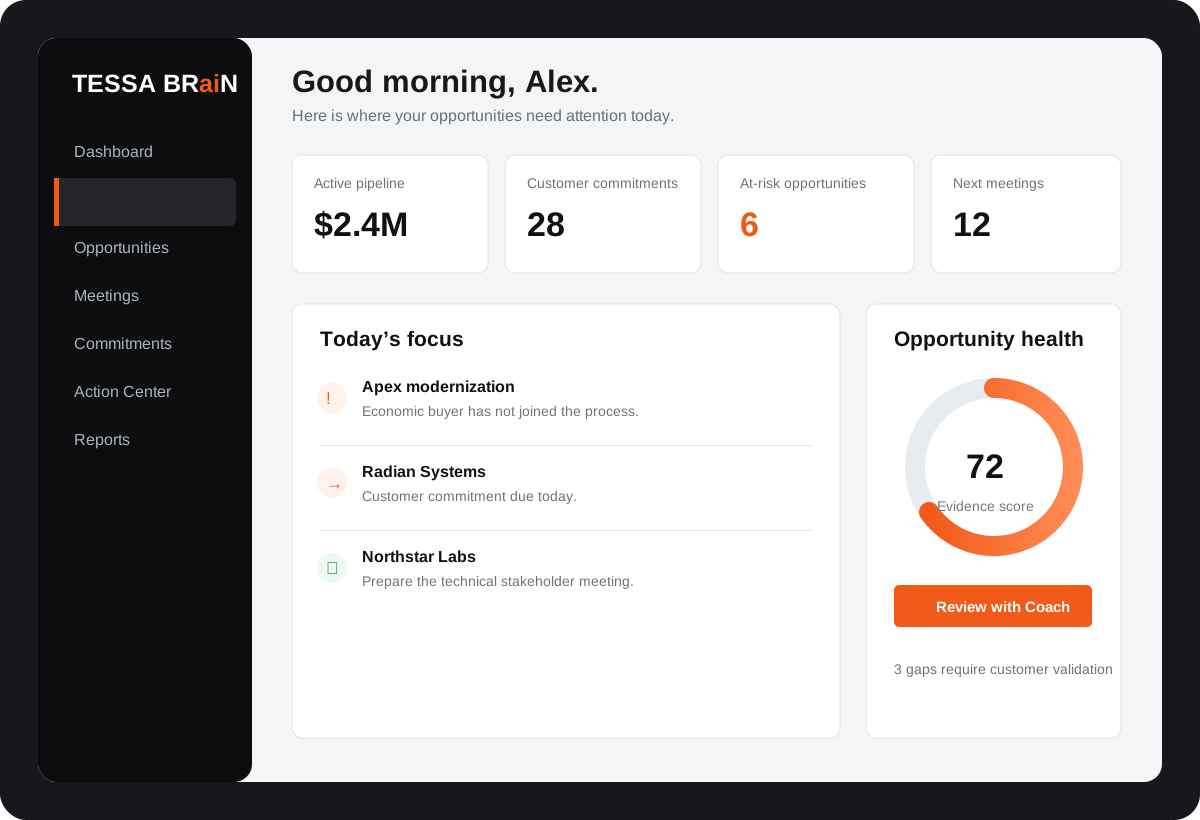
Understand what is advancing, what is stalled, and why.
Evaluate opportunity health from evidence, stakeholder access, urgency, decision process, and mutual commitments.
Why this tool exists.
Traditional pipeline views show stage, value, and close date. They rarely show whether the customer has confirmed the problem, involved decision authority, or completed an agreed action.
Automation follows agreement. The seller sees what TESSA recommends, understands why, and approves the work that affects the customer or CRM.
A clear path from context to action.
The tool guides the user through a repeatable workflow while preserving judgment and accountability.
Score with evidence
Each health component links to known information or an explicit gap.
Find patterns
Identify common stall points, missing stakeholders, objections, and stage problems.
Focus the team
Prioritize opportunities and coaching interventions based on commercial risk.
What gets better.
The point is not to generate more material. It is to make the work clearer, faster, and more consistent.
Explainable forecast confidence
Managers can see why a deal is considered healthy or weak.
Better resource choices
Avoid overinvesting in activity that lacks customer movement.
Process improvement
Use aggregate patterns to refine stages, qualification, content, and coaching.
Bring one real opportunity.
We will show you how TESSA prepares the seller, identifies what is missing, and turns the conversation into a clear next step.